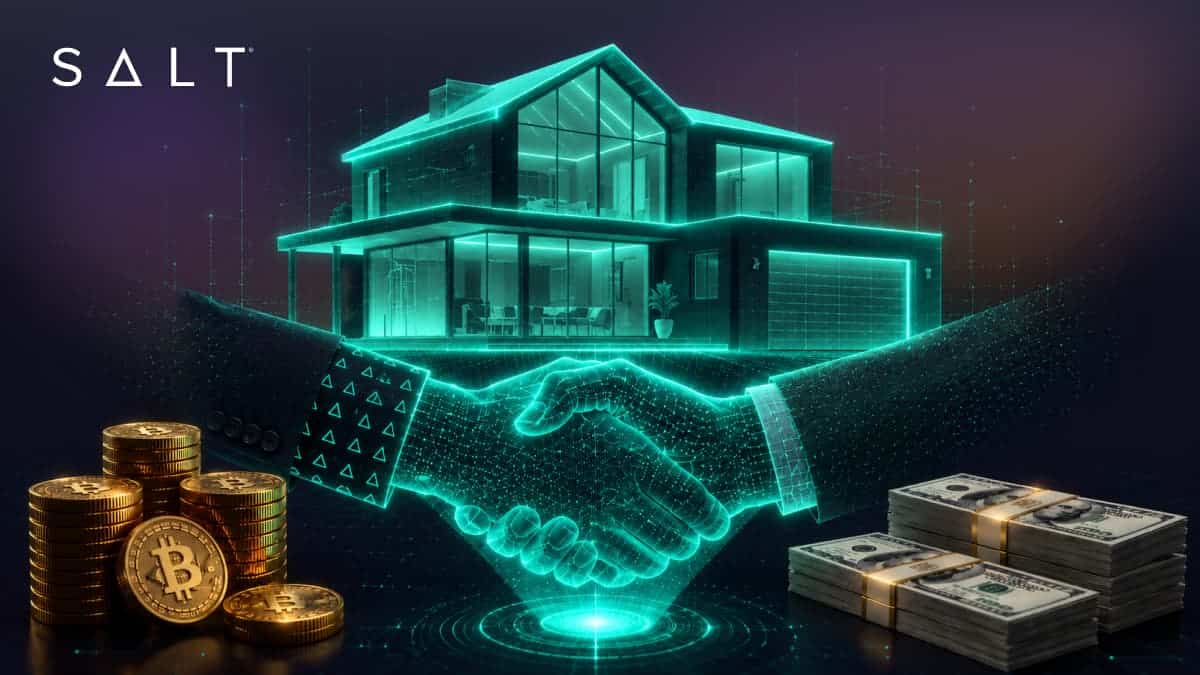

Real estate is one of the most common reasons people want liquidity fast, and for long-term Bitcoin holders the question comes up again and again: can you put your crypto to work toward a home instead of cashing out? The short answer is yes. A bitcoin-backed loan lets you borrow US dollars against the Bitcoin you already own and use that cash toward a down payment, an all-cash offer, or closing costs, all while keeping your BTC. This guide breaks down how it works, what it costs, how it compares to a traditional mortgage, the tax and risk considerations, and the exact steps to get started.
Short Answer: Yes, and Here Is How
A bitcoin-backed loan turns your Bitcoin into spendable US dollars without a sale. You deposit BTC as collateral, receive cash (or stablecoin), and use it however you like, including toward buying a home. Because you are borrowing rather than selling, you keep your upside exposure to Bitcoin and, in the US, taking out a loan is generally not a taxable event. After you repay the loan balance, your collateral is returned.
- Borrow against BTC, ETH, USDC, or USDT as collateral.
- Receive funds in US dollars or stablecoin (USDC or USDT).
- Use the cash toward a down payment, a bridge to an all-cash offer, or closing costs.
- Keep your Bitcoin and its long-term upside potential.
How a Bitcoin-Backed Loan Works for a Home Purchase
A Bitcoin-backed loan is a secured loan. Instead of pledging a house or a car, you pledge digital assets. With SALT, the process looks like this: you choose how much you want to borrow and your loan-to-value (LTV) ratio, you transfer the required collateral, and your funds are sent to you. SALT has offered crypto-backed lending since 2016, and you can model scenarios with the Bitcoin loan calculator before you commit.
Loan-to-value (LTV) is the ratio of your loan amount to the value of your collateral. A lower LTV means you pledge more Bitcoin per dollar borrowed and carry more cushion against price swings. SALT offers 30%, 50%, and 70% LTV tiers, subject to jurisdiction and term length.
For example, at 50% LTV you could borrow $100,000 against roughly $200,000 of Bitcoin. That $100,000 could cover a down payment on a home while your BTC stays in collateral, ready to be reclaimed when the loan is repaid.
Three Ways Bitcoin Holders Use Loans to Buy Property
1. Funding a down payment
The most common use is raising a down payment without triggering a sale. You borrow the cash you need, apply it toward the purchase, and continue to hold your Bitcoin. This can be especially useful when you believe BTC has more room to run and you do not want to give up that exposure.
2. Bridging to an all-cash offer
In competitive markets, all-cash offers win. A bitcoin-backed loan can provide fast liquidity to strengthen an offer or close quickly, after which you may refinance into a traditional mortgage and repay the crypto loan. Always confirm timing and sourcing-of-funds rules with your lender and real estate attorney.
3. Covering closing costs and renovations
Beyond the down payment, buyers often need cash for closing costs, moving, or immediate renovations. Borrowing against crypto can smooth these expenses without forcing you to sell at a moment you would rather hold.
Bitcoin-Backed Loan vs. Selling Bitcoin vs. a Traditional Mortgage
Each path to funding a home has trade-offs. The table below compares the three most common approaches for a Bitcoin holder.
| Factor | Bitcoin-Backed Loan | Selling Bitcoin | Traditional Mortgage |
|---|---|---|---|
| Keep BTC upside | Yes | No | Yes |
| Taxable event (US) | Generally no | Yes, capital gains may apply | No |
| Speed to funds | Fast | Fast | Slower, underwriting heavy |
| Credit check focus | Collateral based | Not applicable | Credit and income heavy |
| Main risk | Price drop and LTV calls | Missed future upside | Long-term interest and lien on home |
For a deeper look at the tax side specifically, see Borrowing Against Bitcoin vs. Selling: How Each Is Taxed in 2026. This article is educational and not tax advice; consult a qualified tax professional about your situation.
What a Bitcoin-Backed Loan Costs
SALT rates currently range from 7.49% to 10.50% APR depending on your LTV tier and term. There are no origination, prepayment, custody, or withdrawal fees on standard loans, and you can repay early at any time without a penalty. Always check the Rates and Fees page for current numbers, since rates are subject to change.
| LTV Tier | 1-Year | 3-Year | 5-Year |
|---|---|---|---|
| 30% LTV (Conservative) | 7.49% APR | 8.24% APR, fixed 3 yrs | 8.49% APR, fixed 5 yrs |
| 50% LTV (Standard) | 8.75% APR | 9.50% APR, fixed 3 yrs | 9.75% APR, fixed 5 yrs |
| 70% LTV (Max liquidity, SALT only) | 10.50% APR | Not offered | Not offered |
Flexible repayment. Depending on your jurisdiction, you can pay interest only, principal and interest, or accrue interest and pay at maturity. The accrue option is popular with buyers who want to access cash with no monthly payments while their funds are tied up in a property purchase.
The Tax Advantage of Borrowing Instead of Selling
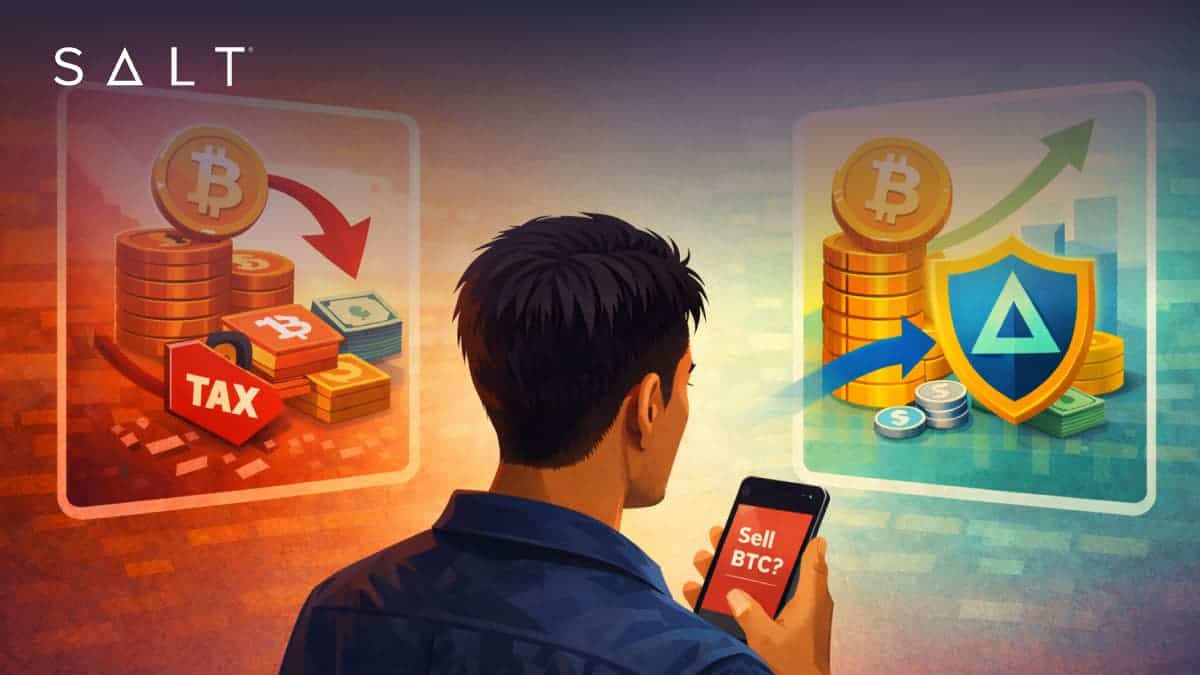
When you sell Bitcoin to fund a purchase, you may trigger a capital gains event on any appreciation. Borrowing against your Bitcoin, by contrast, is generally not treated as a sale in the US, so it typically does not create a taxable event by itself. For long-term holders sitting on significant gains, that difference can be meaningful. This is general information, not tax advice, and rules vary by jurisdiction and personal circumstances, so speak with a licensed tax advisor before acting.
Risks and What to Watch For
Borrowing against volatile collateral carries real risk and is not appropriate for everyone. The most important factor is Bitcoin price movement.
- Price drops can raise your effective LTV. If Bitcoin falls, your collateral is worth less relative to your loan, which can trigger requests to add collateral or pay down the balance.
- A lower starting LTV (such as 30%) provides a larger cushion against volatility than a higher LTV (such as 70%).
- Real estate timelines are rigid. Make sure your loan funding and repayment plan line up with closing dates and any mortgage refinance you intend to use.
- Digital currency is not legal tender and is not FDIC or SIPC insured.
For a full walkthrough of downturn scenarios, read What Happens If Bitcoin Prices Fall? A Borrower’s Guide to Navigating Downturns.
How to Get a Bitcoin-Backed Loan for a Home: Step by Step
- Estimate your numbers. Use the loan calculator to see how much you can borrow at each LTV tier and what the payments look like.
- Confirm availability. Loan terms, LTV options, and payment structures vary by location, so check that your jurisdiction is eligible.
- Create an account and complete identity verification (KYC and AML checks apply).
- Choose your loan amount, term, and LTV, then transfer the required collateral.
- After loan approval, receive funds in US dollars or stablecoin and apply them toward your down payment, offer, or closing costs.
- Repay your loan balance and reclaim your full collateral when the loan is closed.
Is This the Right Move for You?
A bitcoin-backed loan can be a strong fit if you are a conviction holder who needs liquidity for a home but does not want to sell, you can tolerate Bitcoin volatility, and you have a clear repayment plan. It is a weaker fit if you would be stretched thin by a price drop or if you do not have a buffer to add collateral when needed. Compare it against a HELOC or personal loan and talk to a financial professional before deciding. You can also explore SALT’s personal loan options to see what fits your goals.
Frequently Asked Questions
Can I use a bitcoin-backed loan for a mortgage down payment?
Yes. You can borrow US dollars against your Bitcoin and apply the funds toward a down payment. Because you are not selling your BTC, you keep your long-term exposure. Confirm with your mortgage lender how borrowed funds must be documented and sourced.
Do I have to sell my Bitcoin to buy a house?
No. A crypto-backed loan is designed specifically so you can access cash without selling. You pledge Bitcoin as collateral, receive funds, and reclaim your full collateral when the loan is repaid.
Is taking a bitcoin-backed loan a taxable event?
In the US, borrowing against your Bitcoin is generally not treated as a sale, so it typically does not create a taxable event on its own. Selling Bitcoin, by contrast, may trigger capital gains. This is general information, not tax advice, so consult a tax professional.
How much can I borrow against my Bitcoin?
It depends on your LTV tier. At 50% LTV, for example, you could borrow about $100,000 against roughly $200,000 of Bitcoin. SALT offers 30%, 50%, and 70% LTV options, subject to jurisdiction and term length, minimum loan amounts vary by jurisdiction.
What happens if Bitcoin drops after I take the loan?
A price drop increases your effective LTV, which can lead to a request to add collateral or pay down the balance. Choosing a lower starting LTV gives you more cushion. Review the borrower downturn guide for detailed scenarios.
What can I use as collateral?
SALT accepts BTC, ETH, USDC, and USDT as collateral, with funds disbursed in US dollars or stablecoin. Availability can vary by jurisdiction.
Are there monthly payments?
You can often choose interest-only, principal and interest, or financed interest, depending on your jurisdiction. The financed interest option lets some borrowers avoid monthly payments while their cash is committed to a purchase.
Disclaimer
This article is for informational and educational purposes only and does not constitute financial, investment, tax, or legal advice. Borrowing against collateral entails risk and may not be appropriate for your needs. Rates and terms are subject to change and may vary based on loan amount, qualifications, collateral profile, and jurisdiction. SALT loans are subject to jurisdictional limitations and other restrictions, and may not be available in your area; see the list of eligible jurisdictions for availability. SALT does not offer loans to all prospective borrowers, and loan options selected may not be available in your jurisdiction, for your requested loan amount, or for your preferred collateral type. Digital currency is not legal tender, is not backed by any government, and SALT accounts are not subject to FDIC or SIPC protections. SALT loans are originated by SALT Lending LLC, NMLS #1711910. Always consult your own financial, tax, and legal advisors before making a decision.