
More companies than ever hold Bitcoin and other digital assets on their balance sheets. Some accumulated crypto through customer payments, some made a deliberate treasury allocation, and some are crypto-native businesses whose reserves have always lived on-chain. Whatever the path, these companies eventually run into the same problem: the asset they believe in most is also the hardest one to spend without giving it up.
Crypto-backed credit solves that problem. By borrowing against digital assets instead of selling them, a business can fund payroll, inventory, expansion, or a time-sensitive opportunity while its treasury position stays intact. This guide covers how crypto-backed business loans work, the most common working capital use cases, how they compare to traditional financing, and how to manage the risks. If you are thinking at the treasury strategy level rather than the financing level, start with our companion guide on Bitcoin treasury management for private companies and family offices.
What Is a Crypto-Backed Business Loan?
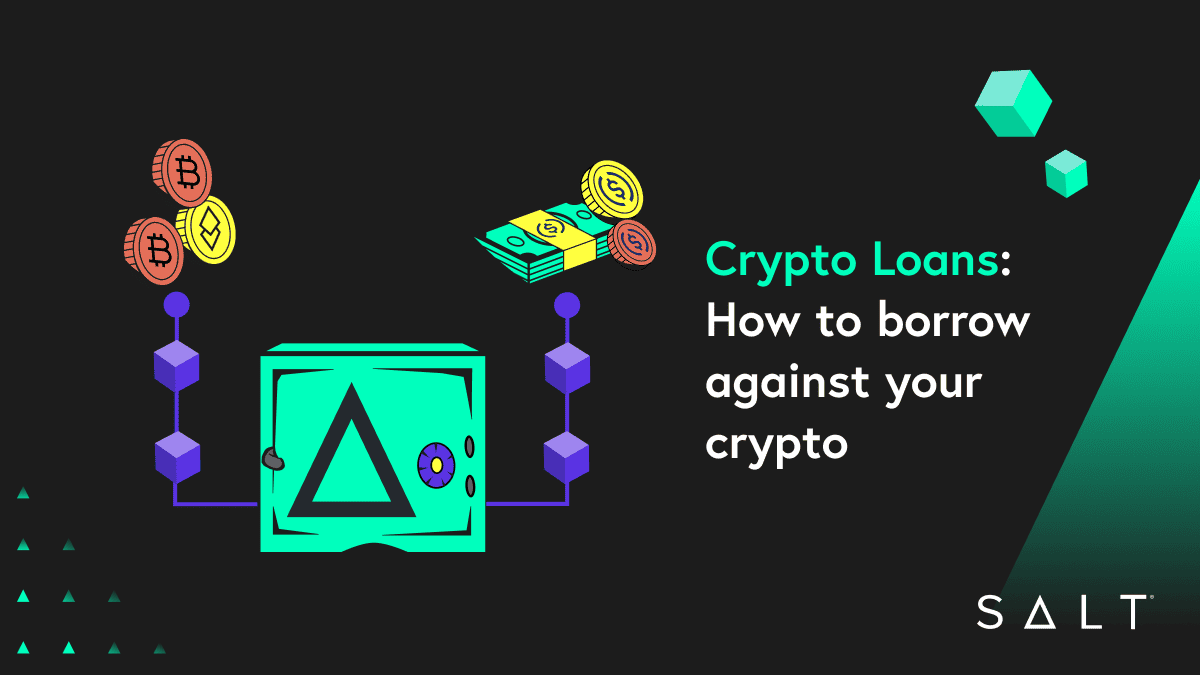
A crypto-backed business loan is financing extended to a business entity, such as an LLC or corporation, that is secured by the company’s digital assets rather than by real estate, equipment, receivables, or a personal guarantee alone. The business pledges Bitcoin or other accepted crypto as collateral, the lender holds that collateral in custody for the life of the loan, and the business receives proceeds in dollars or stablecoins. When the loan is repaid, the collateral is returned.
The core appeal is speed and simplicity. Because the loan is secured by liquid collateral, approval does not hinge on years of financial statements, revenue covenants, or the months-long underwriting cycle of a bank credit facility. What matters most is the collateral itself.
Working Capital Use Cases
In practice, businesses use crypto-backed credit for the same things they would use any working capital line for. The difference is what funds it. Common examples:
- Payroll and operating expenses. Smoothing cash flow through seasonal dips or long receivable cycles without liquidating treasury assets at an inconvenient price.
- Inventory and supplier payments. Funding a large purchase order or taking advantage of early-payment discounts from suppliers.
- Expansion. Opening a location, hiring ahead of growth, or funding equipment purchases while keeping the balance sheet’s crypto position intact.
- Bridge financing. Covering the gap while waiting on an equity round, a large receivable, or the sale of another asset.
- Tax and one-time obligations. Meeting a large tax bill or legal settlement without a forced sale of appreciated assets.
- Opportunistic moves. Acting quickly on an acquisition, a discounted asset, or a competitor’s exit when timing matters more than anything.
Why Borrow Instead of Sell?
A business that sells appreciated crypto to raise cash typically triggers a taxable gain, gives up future upside, and shrinks the treasury position it may have spent years building. Borrowing against the same assets raises comparable cash while deferring those consequences. Loan proceeds are generally not taxable income because they must be repaid, a principle we cover in depth in our guide to how borrowing and selling Bitcoin are each taxed. Corporate tax treatment has additional layers, including how digital assets are accounted for on the books, so treat that as a conversation with your CPA rather than a blog takeaway.
The strategic version of the same point: companies that believe their crypto will appreciate faster than their loan rate costs them are choosing to keep the asset working while borrowed dollars do the spending. That is a judgment call each business must make with clear eyes about volatility, covered below.
Crypto Credit vs Traditional Business Financing
| Crypto-Backed Loan | Bank Line of Credit / Term Loan | |
|---|---|---|
| Underwriting | Collateral-based; entity verification | Financials, credit history, covenants, often personal guarantees |
| Time to funding | Days, sometimes faster | Weeks to months |
| Collateral | Digital assets held in custody | Real estate, equipment, receivables, blanket liens |
| Business credit history | Not the deciding factor | Central to approval |
| Main risk | Collateral volatility and margin calls | Covenant breaches, renewal risk |
| Best fit | Companies with significant crypto and near-term cash needs | Companies with strong financials and time to spare |
These are complements as often as competitors. Plenty of businesses keep a bank relationship for long-term needs and use crypto-backed credit for speed, or to avoid pledging the assets a bank would demand.
How the Process Works
While details vary by lender, a business loan against crypto generally follows five steps:
- Apply as an entity. The business completes verification (often called KYB, or know your business), including formation documents and beneficial ownership information.
- Choose loan terms. Loan amount, duration, and loan-to-value ratio. A lower LTV means more cushion against price swings before any margin action.
- Transfer collateral. The pledged crypto moves into the lender’s custody arrangement for the life of the loan.
- Receive funding. Proceeds arrive in dollars or stablecoins, typically within days of collateral confirmation.
- Repay and reclaim. Make scheduled payments, then receive the collateral back at payoff.
Managing Volatility: The Risk Side of the Ledger
The honest trade-off of crypto-backed credit is collateral volatility. If the market falls far enough, the loan’s LTV rises and the lender may issue a margin call, requiring added collateral or a paydown. Businesses should treat this as a cash management planning item, not a surprise. Our explainer on margin calls and LTV covers the mechanics, and SALT’s Margin Event Calculator lets a CFO model exactly what price level would trigger action before ever taking the loan.
Structural protections matter too. SALT offers Stabilization, which is designed to convert collateral to a stable asset during severe drawdowns to help preserve value, and SALT Shield®, which is designed to protect qualifying loans from market-triggered liquidation. Conservative LTVs, a collateral reserve, and a written response plan for margin scenarios round out the toolkit.
Where SALT Fits
SALT has been lending against digital assets since 2016 and works with businesses ranging from crypto-native startups to established companies with a treasury allocation. Business borrowers get a defined loan agreement, human support, and the volatility tools described above. You can explore terms on our business lending page or estimate borrowing capacity with the loan calculator.
Frequently Asked Questions
Can an LLC or corporation get a Bitcoin-backed loan?
Yes. Lenders that serve businesses accept applications from entities such as LLCs and corporations. Expect an entity verification process covering formation documents and beneficial ownership, similar in spirit to opening a business bank account. The collateral, rather than the company’s credit history, does most of the underwriting work.
What can business loan proceeds be used for?
Generally any legitimate business purpose: payroll, inventory, expansion, equipment, tax obligations, bridge financing, or opportunistic investments. Loan agreements may exclude certain uses, so review terms before signing.
How fast can a business get funded?
Because underwriting is collateral-based, funding typically happens in days rather than the weeks or months common with bank credit facilities. The main variables are entity verification and how quickly the business transfers collateral.
What happens if crypto prices drop during the loan?
If the loan’s LTV rises past defined thresholds, the lender issues a margin call and the business must add collateral or pay down the balance within a set window. Planning for this scenario in advance, by choosing a conservative LTV and holding a collateral reserve, is the single most important risk practice for business borrowers.
Does a crypto-backed loan affect the company’s credit?
Crypto lenders generally do not report to business credit bureaus, and approval does not depend on business credit scores. That cuts both ways: the loan will not build business credit history, but a strong credit file is not required to qualify.
Is the interest tax deductible for a business?
Interest on debt used for legitimate business purposes is generally deductible as a business expense in the US, but the details depend on how proceeds are used and how the business is structured. Digital asset accounting adds further nuance, so confirm treatment with your CPA before relying on the deduction.
Disclaimer
This article is for general informational purposes only and does not constitute financial, legal, tax, accounting, or investment advice. Businesses should consult their own legal, tax, and accounting advisors before borrowing against digital assets. Digital assets are highly volatile and borrowing against collateral entails risk, including the potential loss of collateral. Rates, terms, and product features are subject to change and may vary based on loan amount, qualifications, entity type, and collateral profile. SALT loans are subject to jurisdictional limitations and other restrictions; for current availability in your jurisdiction, see saltlending.com/map-list. SALT loans are originated by SALT Lending LLC (f/k/a SALT Master Fund II, LLC), NMLS 1711910.