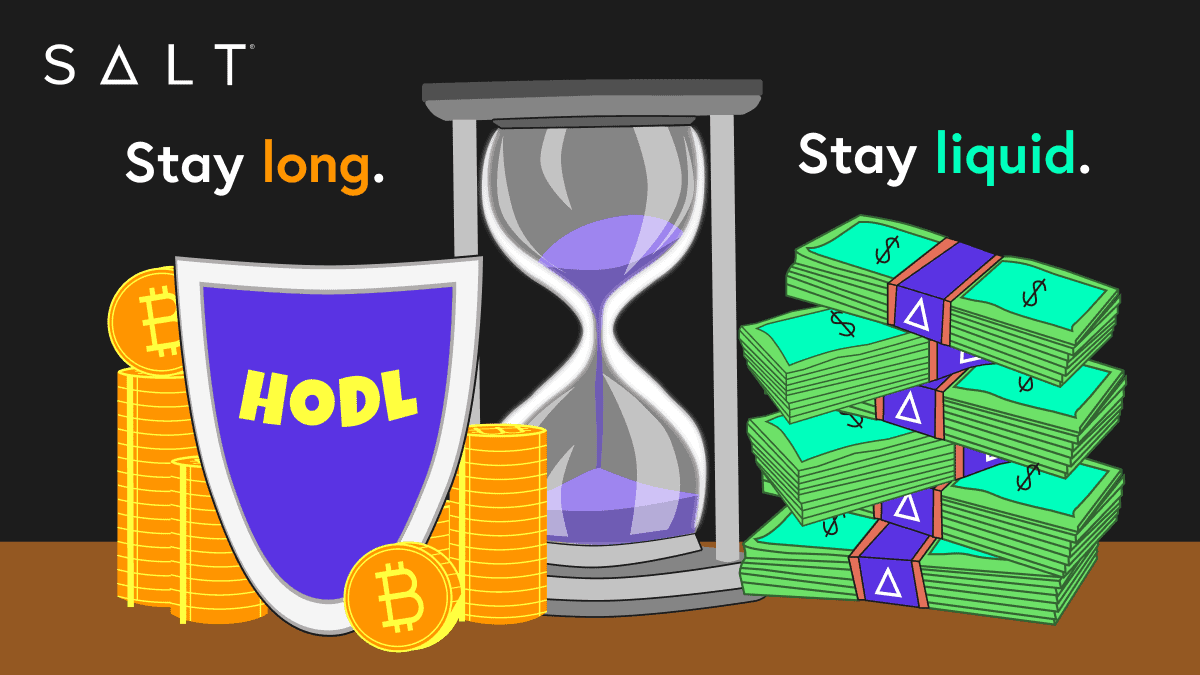

A bitcoin-backed term loan hands your treasury a fixed amount of capital at a known rate with a known payoff date. A bitcoin-backed credit line hands your treasury a borrowing limit you can draw against, repay, and draw against again. Both let a company raise dollars without selling bitcoin. They behave very differently once the money is on your balance sheet.
If your funding need is defined, a term loan is usually the cheaper and more forecastable choice. If your need is recurring or genuinely unpredictable, a credit line usually wins on flexibility, though you pay for that flexibility in fees, rate variability, and collateral that stays tied up whether you use the line or not. Below is how treasury teams actually make the call.
The short answer for treasury teams
- Choose a term loan when: you know the amount, you know the timing, and you want a fixed interest expense line in the forecast.
- Choose a credit line when: your cash gap is seasonal or lumpy and you would rather pay for optionality than carry idle borrowed cash.
- Watch the collateral math either way: both structures are secured by a volatile asset, so loan-to-value and margin call mechanics matter more than the headline rate.
- Do not assume a line is cheaper: commitment and unused line fees on an undrawn facility can cost more than interest on a small term loan.
What Is A Bitcoin-Backed Term Loan?
A bitcoin-backed term loan is a secured loan in which a company pledges bitcoin as collateral and receives a single disbursement of cash or stablecoin. The lender holds the collateral for the life of the loan. When the loan is repaid, the collateral is returned.
The mechanics are straightforward. Your company chooses a loan amount and a loan-to-value ratio, which determines how much bitcoin has to be posted. A 50% LTV loan of $500,000, for example, requires roughly $1,000,000 of bitcoin as collateral. You then pick a term and a payment election, and the funds land in your operating account.
At SALT, business term loans run 1, 3, or 5 years with rates from 7.49% to 10.50% APR, minimum loan amounts vary by jurisdiction, funding in 1 to 2 business days, payouts in US dollars or stablecoin, and no origination, prepayment, custody, or withdrawal fees. Full current pricing lives on the Rates and Fees page.
What Is A Bitcoin-Backed Credit Line?
A bitcoin-backed credit line, sometimes marketed as a crypto-backed revolver or a digital asset facility, is a committed borrowing limit sized against pledged bitcoin. You draw what you need, when you need it, and interest generally accrues only on the outstanding balance. Repay a draw and the availability comes back.
That flexibility comes with structural costs that are easy to overlook in a term sheet comparison:
- Collateral is sized to the full limit. A $2,000,000 line typically requires collateral against the whole $2,000,000, even in a quarter where you draw nothing.
- Rates are usually floating. Your interest expense line becomes an estimate rather than a known number.
- Fees exist whether you borrow or not. Commitment fees, unused line fees, and annual renewal fees are common.
- Availability can be pulled. Limits get reduced or facilities go unrenewed, and that risk tends to show up exactly when markets are stressed and you need liquidity most.
Bitcoin Loans Vs Credit Lines: Side-By-Side Comparison
Use this table as a first-pass screen, then pressure test the two or three factors that matter most for your company.
| Factor | Bitcoin-Backed Term Loan | Bitcoin-Backed Credit Line |
|---|---|---|
| How capital arrives | One lump sum funded at closing | A limit you draw against as needed |
| Interest charged on | The full principal balance | Only the amount currently drawn |
| Rate structure | Commonly fixed for the full term | Commonly variable and repriced |
| Repayment | Scheduled payments to a known maturity date | Revolving, with minimum interest due on the drawn balance |
| Cost predictability | High, because the schedule is known on day one | Lower, because usage and rates both move |
| Typical fees | Origination or administrative fees where applicable | Commitment, unused line, or annual renewal fees |
| Collateral posted | Sized once to the funded amount | Sized to the full limit, even when undrawn |
| Treasury reporting | Clean note payable and a fixed interest expense line | Fluctuating balance that complicates forecasting |
| Renewal risk | None during the term | The limit can be reduced or not renewed |
| Best fit | A defined, one-time capital need | Recurring or unpredictable liquidity gaps |
How Each Structure Shows Up In Your Treasury Reporting
This is where the decision gets practical. A term loan produces a single note payable with a fixed schedule. Your CFO can drop twelve, thirty-six, or sixty rows into a model on day one and be done. Interest expense is a line item, not a variable. Covenant conversations are minimal because the loan is fully secured by posted collateral rather than by operating performance.
A credit line produces a balance that moves. Forecasting interest expense requires forecasting utilization, which most treasury teams do poorly because draws are event driven. Add a floating rate and you now have two moving inputs. Many facilities also carry reporting requirements, borrowing base certificates, or periodic recertification that consumes finance team hours.
One term loan feature worth knowing: SALT lets borrowers elect interest-only payments, principal and interest payments, or accrued interest paid at maturity, subject to jurisdiction. That last option lets a company take capital today and defer all cash outflow to the payoff date, which behaves a lot like a bullet facility and can be the right answer for a project that will not generate cash until it is finished. See how businesses use crypto-backed credit for working capital for more on matching structure to cash flow timing.
Collateral Risk Is The Variable That Changes The Math
Rate comparisons dominate most financing decisions. With bitcoin-backed borrowing, collateral risk deserves equal weight, because the asset securing the loan can move 20% in a week.
If bitcoin falls, your loan-to-value ratio rises. Cross the lender threshold and you face a margin call, which you resolve by posting more collateral, making a partial repayment, or allowing a portion of collateral to be liquidated. This is true for both structures, but a fully drawn credit line and a term loan at the same LTV carry the same exposure, while an undrawn line still has collateral locked up doing nothing.
Two practical consequences for treasury:
- Borrow at a lower LTV than the maximum. A 30% LTV loan tolerates a far deeper drawdown before a margin call than a 50% LTV loan. The rate is also lower at conservative tiers.
- Hold a collateral reserve. Keeping unpledged bitcoin or stablecoin available means a margin call becomes a transfer rather than a forced sale.
You can model the specific price levels that would trigger a call using the BTC margin event calculator, and read the full mechanics in our guide to margin calls on crypto-backed loans. SALT also offers optional SALT Shield® and Stabilization features for companies that want to reduce the odds of a liquidation event.
Four Treasury Scenarios And The Structure That Usually Fits
A known capital expenditure. You are buying $1.2 million of equipment next quarter. Amount and timing are both fixed, so a term loan at a fixed rate is the clean answer. Paying commitment fees on a line for a one-time purchase is waste.
Seasonal working capital swings. Inventory builds in Q3 and unwinds in Q4, every year. A revolving line matches the shape of the need. If a revolver is not available to you, a short term loan sized to the peak, with an accrue-to-maturity election and no prepayment penalty, gets you most of the way there.
An acquisition or closing bridge. You need certainty of funds by a date. A term loan funded in 1 to 2 business days provides that certainty. A line with conditions to draw introduces execution risk into a deal timeline.
An opportunistic liquidity reserve. You want dry powder without borrowed cash sitting idle and accruing interest. This is the strongest case for a line. Just price the total annual cost of holding an undrawn facility, including committed collateral, and compare it against simply borrowing when the opportunity appears.
What SALT Offers Today
SALT provides bitcoin-backed and crypto-backed term loans to businesses and has done so since 2016. We do not market a revolving credit line, and we would rather say that plainly than blur the terminology. What we do offer is a term structure with several features that treasury teams commonly use to get line-like flexibility:
- No prepayment penalty, so you can repay early when cash comes in without eating a fee.
- Three payment elections, including accruing interest and paying at maturity, subject to jurisdiction.
- Refinancing generally available during the term, subject to current rates and eligibility.
- Zero origination, custody, and withdrawal fees, so the APR is the cost rather than a starting point.
- Collateral options including BTC, ETH, USDC, and USDT.
- Payouts in US dollars or stablecoin, funded in 1 to 2 business days.
For larger balance sheets, our Private Clients team structures facilities case by case. If you are earlier in the process, the bitcoin treasury management guide for private companies and family offices is the better starting point.
A Five-Question Checklist For Choosing Between The Two
- Do I know the amount I need, within roughly 10%? If yes, lean term loan.
- Do I know when I need it? If the date is firm, certainty of funding beats optionality.
- What is the all-in annual cost of an undrawn line, including fees and committed collateral? Compare that number to interest on the loan you would actually take.
- What bitcoin price would trigger a margin call at my chosen LTV, and can I cover it without selling? If the answer is uncomfortable, borrow less or drop to a lower LTV tier.
- Can my finance team support the reporting a revolving facility requires? Flexibility has an operational cost as well as a financial one.
Frequently Asked Questions
Can a company borrow against bitcoin without selling it?
Yes. A bitcoin-backed loan lets a company pledge bitcoin as collateral and receive cash or stablecoin while retaining ownership of the bitcoin. The collateral is returned when the loan is repaid, so the company keeps its long-term exposure to the asset.
Is a bitcoin-backed term loan cheaper than a credit line?
Often, yes, on an all-in basis. A term loan charges interest on the drawn principal with no commitment or unused line fees. A credit line only becomes the cheaper option when utilization is low and the fee structure is genuinely light, which is worth verifying rather than assuming.
How much bitcoin does a company need to pledge?
It depends on the loan-to-value ratio. At 50% LTV, roughly $2 of bitcoin is required for every $1 borrowed. At a conservative 30% LTV, closer to $3.33 of bitcoin is required per dollar. Our loan calculator will run the numbers for a specific amount.
What happens to a corporate bitcoin loan if the price of bitcoin drops?
The loan-to-value ratio increases. If it crosses the lender threshold, the borrower receives a margin call and can respond by posting additional collateral, making a partial repayment, or allowing a portion of collateral to be sold. Borrowing at a lower LTV and keeping reserve collateral available are the two most effective defenses.
Does a bitcoin-backed business loan require a credit check?
SALT does not require a credit check for a bitcoin-backed loan, because the loan is secured by pledged collateral rather than underwritten against credit history. Borrower eligibility is still determined case by case and is subject to know your customer and anti money laundering requirements.
Is interest on a bitcoin-backed business loan tax deductible?
Interest on borrowing used for legitimate business purposes is often deductible, but treatment depends on your jurisdiction, entity structure, and use of proceeds. We cover the general framework in our post on bitcoin loan interest deductibility. Confirm your specific situation with your tax advisor.
Which is better for a company holding bitcoin as a treasury reserve asset?
If the company intends to hold bitcoin long term and needs periodic operating liquidity, a low-LTV term loan usually produces the most predictable outcome, because it converts a volatile asset into a fixed obligation with a known end date. Companies with genuinely revolving needs and the operational capacity to manage a facility may prefer a line.
Put Your Bitcoin To Work Without Selling It
If you are weighing structures for your corporate treasury, the fastest way to get real numbers is to run your scenario through the bitcoin loan calculator or talk to our team about your balance sheet. SALT has been lending against digital assets since 2016.
Disclaimer
This article is for informational purposes only and does not constitute legal, tax, accounting, investment, or financial advice. You should consult your own legal, tax, and financial advisors before entering into any financing arrangement.
SALT loans are subject to jurisdictional limitations and other restrictions, and loan terms may vary or may not be available in your jurisdiction, for your requested loan amount, or for your preferred collateral type. For a current list of jurisdictions where SALT is able to lend, see saltlending.com/map-list. SALT does not offer loans to all prospective borrowers. Available rates and terms are subject to change and may vary based on loan amount, qualifications, jurisdiction, and collateral profile. Additional terms, conditions, requirements, suitability, and screenings may apply at the sole discretion of SALT.
Borrowing against collateral entails risk and may not be appropriate for your needs. Digital currency is not legal tender, is not backed by the United States or any other government, and SALT accounts are not subject to FDIC or SIPC protections. Digital assets are highly speculative and the market is largely unregulated. SALT loans are originated by SALT Lending LLC, NMLS 1711910.