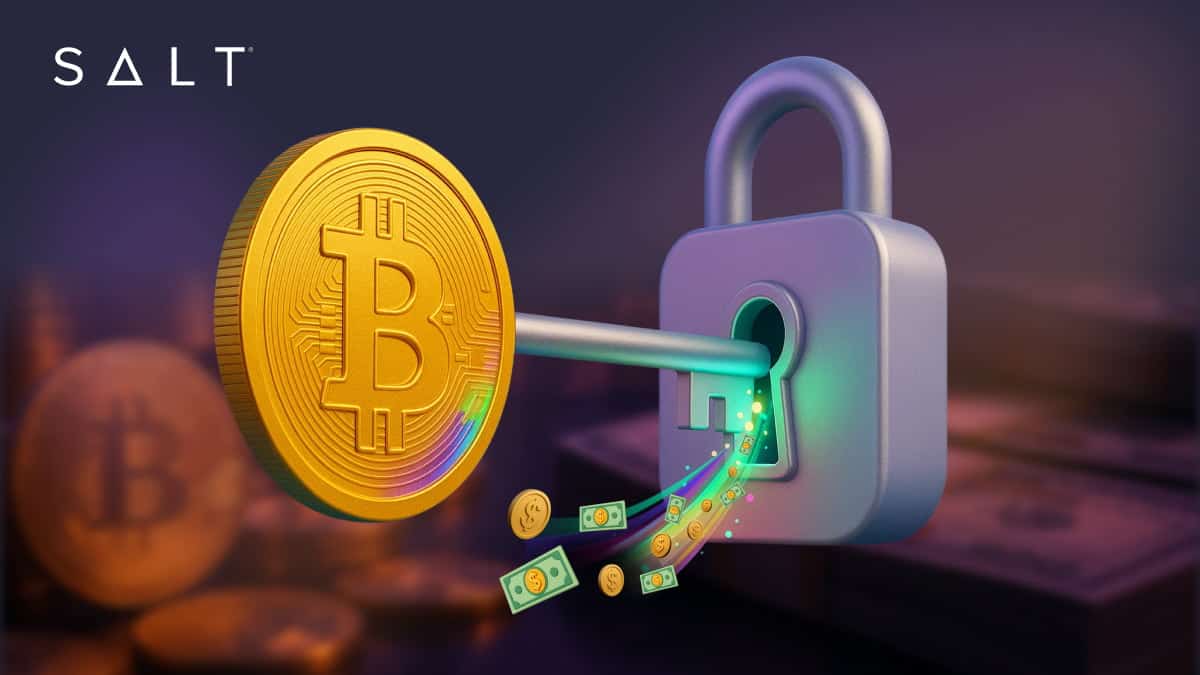

For years, most Bitcoin holders thought about their BTC primarily as an investment or long-term store of value.
That is beginning to change.
As Bitcoin becomes more widely held and integrated into the financial system, more individuals and businesses are discovering another characteristic of the asset: it can be used as collateral to access liquidity without selling.
At SALT, one of the clearest examples of this shift is within real estate.
Over the past 12 to 18 months, we have seen a sharp increase in borrowers using Bitcoin-backed loans to help purchase homes, acquire land, fund improvements, or move quickly when a real estate opportunity arises. In fact, roughly 1 in 4 people who reach out to our Private Client team are asking about using their Bitcoin for real estate.
What Is a Bitcoin-Backed Real Estate Loan?
A Bitcoin-backed real estate loan is a loan secured by Bitcoin the borrower pledges as collateral, with the proceeds used for a real estate purpose such as a home purchase, down payment, land acquisition, or renovation. The borrower does not sell the Bitcoin, and the collateral is returned once the loan is repaid according to its terms.
Bitcoin Is Becoming Purchasing Power
Real estate frequently creates a mismatch between wealth and liquidity.
A buyer may have substantial assets but not enough cash readily available for an all-cash offer or larger down payment. A business may find the right property before its bank can complete underwriting. A homeowner may need capital for renovations immediately after closing.
Bitcoin can provide another option.
Instead of selling BTC to generate cash, a holder can pledge Bitcoin as collateral and borrow against it. That allows the Bitcoin to remain part of their long-term asset strategy while creating liquidity that can be deployed elsewhere.
And this concept is beginning to move well beyond dedicated Bitcoin lenders.
In March 2026, Better.com and Coinbase introduced a Bitcoin-backed structure that allows qualified homebuyers to pledge Bitcoin toward their down payment without selling it, then made it generally available to qualified U.S. buyers in late August. The structure combines a traditional conforming mortgage with a separate loan secured by the borrower’s Bitcoin and a second lien on the property.
Perhaps even more interestingly, Bitcoin price volatility alone does not trigger a margin call or require the borrower to add additional collateral.
That is a meaningful milestone.
It demonstrates that Bitcoin is increasingly being considered not simply as something a homeowner might sell to fund a purchase, but as an asset that can remain intact while supporting the financing itself.
The Better and Coinbase structure does come with tradeoffs. Borrowers must pledge Bitcoin worth at least 250% of the down payment loan, and the collateral generally stays pledged until the mortgage is repaid or refinanced. Different Bitcoin-backed loans handle volatility, collateral, and repayment in different ways, so it is worth understanding the terms of any structure before choosing one.
Why Real Estate Is a Natural Use Case for Bitcoin-Backed Loans
Timing matters enormously in real estate.
Freddie Mac’s average 30-year fixed mortgage rate reached 7.28% as of October 1, 2026, the highest level since November 2023, compared with the historic low of 2.65% reached in early 2021.
At the same time, cash continues to play an important role in home purchases. The National Association of REALTORS® reported that 26% of buyers paid all cash in its 2025 Profile of Home Buyers and Sellers, an all-time high. Between 2003 and 2010, fewer than one in 10 buyers paid all cash.
For Bitcoin holders, that creates an interesting opportunity.
How a Bitcoin-Backed Bridge Loan Works for a Home Purchase
A Bitcoin-backed loan can effectively function as bridge capital.
A buyer can pledge BTC, obtain financing, and use those proceeds to help make an all-cash offer or complete a transaction without waiting for a conventional mortgage process. Once the property has been acquired, the borrower can decide whether to maintain the Bitcoin-backed financing or establish longer-term financing and repay the loan.
The Bitcoin loan does not necessarily replace the mortgage.
It can solve the timing problem before the mortgage is in place.
The same approach can help provide a larger down payment, preserve other cash reserves, or provide capital for renovations and improvements after an acquisition.
Example: A buyer holding $1,000,000 in Bitcoin borrows $500,000 at a 50% loan-to-value (LTV) ratio and uses the proceeds to make a cash offer on a property. After closing, the buyer places a traditional mortgage on the home and uses those funds to repay the Bitcoin-backed loan. The buyer competes as a cash buyer, keeps the Bitcoin, and the collateral is returned once the loan is repaid. If Bitcoin’s price falls during the loan and the LTV rises past certain thresholds, the borrower may need to add collateral or make a payment.
Businesses Are Using Bitcoin the Same Way
We are seeing similar behavior among small and midsized businesses.
Some companies are choosing to accumulate Bitcoin as part of their treasury strategy rather than holding all excess capital in cash. When they identify a property, parcel of land, expansion project, or other opportunity, that Bitcoin can then become a financing asset.
Rather than immediately selling it, or waiting through a lengthy commercial lending process, the business can potentially borrow against BTC it already owns and deploy the proceeds. Common examples include acquiring owner-occupied commercial property, buying land for expansion, funding a build-out, or closing on a property before a bank loan is finalized.
That changes the role Bitcoin can play on a balance sheet.
It is no longer just capital being held for potential appreciation. It can become productive collateral capable of providing liquidity when the business needs it.
Where SALT Fits
Real estate transactions rarely fit neatly into a single financing structure, which is where the flexibility of Bitcoin-backed lending can be especially useful.
SALT offers borrowers flexibility across rates, terms, loan structures, and repayment options, allowing the financing to be matched more closely to the specific real estate opportunity. There are also no origination fees or prepayment penalties, which can make the economics particularly attractive for borrowers who want to use Bitcoin-backed financing to move quickly, complete a purchase, and then refinance into traditional long-term financing shortly afterward.
Just as important is the support behind the loan. SALT has been lending against digital assets since 2016, with experienced teams across lending, Bitcoin, custody, risk, and operations available to help borrowers understand their options and structure the right solution.
For relationships of $500,000 or more, SALT’s Private Client team provides white-glove service, priority support, an experienced dedicated Relationship Manager, and direct access to executives.
Have a real estate opportunity in mind? Schedule a call with the SALT team to talk through structuring a Bitcoin-backed loan around your timeline.
Frequently Asked Questions
Can You Use Bitcoin to Buy a House Without Selling It?
Yes. Instead of selling Bitcoin, a buyer can pledge it as collateral for a loan and use the proceeds toward a purchase, down payment, or closing costs. The Bitcoin is held as collateral and returned once the loan is repaid according to its terms.
Is Borrowing Against Bitcoin a Taxable Event?
Borrowing against an asset is generally not treated as a sale, which is one reason many holders prefer it to selling. Tax treatment depends on your individual circumstances and jurisdiction, so consult a qualified tax professional.
What Happens If the Price of Bitcoin Drops During My Loan?
With an LTV-based loan, a price decline raises the loan’s LTV. If it crosses certain thresholds, the borrower may be asked to add collateral or make a payment, and some or all of the collateral may be liquidated if the LTV is not restored. Reviewing these thresholds before borrowing helps you plan for volatility.
How Quickly Can a Bitcoin-Backed Loan Fund?
Because Bitcoin-backed loans are secured by digital assets rather than a lengthy property appraisal and income review, they can often fund faster than a traditional mortgage, usually within 2 business days of loan approval.
Can Bitcoin Loan Proceeds Be Used for a Down Payment?
Often, yes, but some mortgage programs limit borrowed funds for a down payment or require them to be disclosed. If you plan to pair a Bitcoin-backed loan with a mortgage, coordinate with your mortgage lender early.
Can Businesses Use Bitcoin-Backed Loans for Real Estate?
Yes. Businesses that hold Bitcoin in their treasury can borrow against it to fund property purchases, land acquisitions, expansions, or improvements without selling their BTC.
This content is for informational purposes only and does not constitute financial, investment, legal, or tax advice. Digital asset-backed loans involve risk, including the potential liquidation of collateral if loan-to-value thresholds are exceeded. Loan terms, rates, and availability vary and are subject to approval. SALT lending products are not available in all jurisdictions. See saltlending.com/map-list for current availability. References to third-party products are for informational purposes only and do not constitute an endorsement. Consult a qualified tax professional regarding your individual situation.